A lawn can make the difference between a garden that feels unfinished and one that is ready to use. The phrase turf seeded lawn usually refers to the choice homeowners face between laying ready-grown turf or growing grass from seed. Both can produce a healthy, attractive green space, but the right answer depends on your budget, timescale, ground conditions and how soon the garden needs to cope with family life, pets and regular use.
For homes across Edinburgh, the Lothians and Central Scotland, the decision also needs to account for our changeable weather. Good preparation matters more than the method chosen. A level, free-draining base and suitable grass variety will give better results than simply choosing the cheapest turf or seed.
Turf or Seeded Lawn: The Main Difference
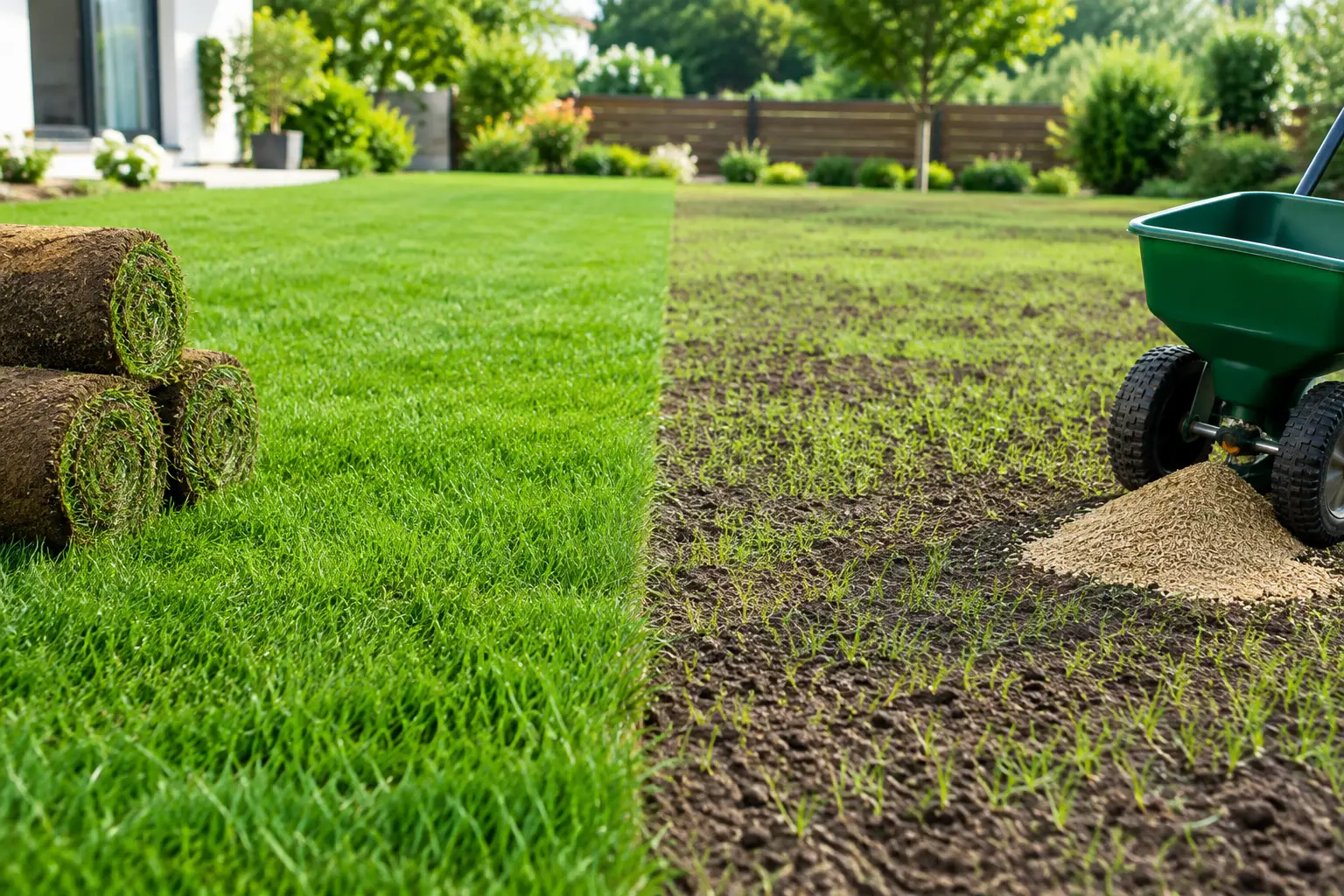
Turf is mature grass that has been professionally grown, cut into rolls and laid onto prepared soil. It gives an immediate green finish, making it a popular option for newly landscaped gardens, properties being prepared for sale and outdoor spaces that need to look smart without a long wait.
A seeded lawn is created by sowing grass seed directly into cultivated topsoil. It takes longer to establish, but it provides more choice over the grass mixture and is generally the lower-cost option for larger areas.
Neither is automatically better. Turf offers speed and a more predictable visual result from day one. Seed offers flexibility and value, provided you can give it the right conditions and are prepared to wait for it to establish.
When Turf Is the Better Choice
Fresh turf is often the practical choice when a garden renovation has involved new patios, fencing, drainage work or decorative stonework. Once the heavy work is complete, a turfed lawn creates a clean, finished contrast with paving and planted borders straight away.
It is particularly useful where the lawn needs to look good quickly. A newly purchased home, an upcoming family event or a property improvement project may not allow several months for seed to fill in. Quality turf also helps to reduce the early weed problem associated with bare soil, although weeds can still appear around edges and from existing ground conditions.
Turf can be laid through much of the year, as long as the ground is not frozen, waterlogged or baked hard. In Scotland, spring and early autumn are often ideal because rainfall helps the roots settle in without extreme heat. During a dry spell, however, turf needs thorough watering from the first day. A lawn can look green on the surface while its roots are failing underneath, so watering must reach into the soil rather than simply dampening the blades.
The trade-off is cost. Turf has to be grown, harvested, transported and laid promptly, so the material and installation cost is higher than seed. It also requires careful handling. Turf left rolled up for too long can overheat, dry out and struggle to establish.
When a Seeded Lawn Makes Sense
Grass seed is a sensible option for homeowners with a generous lawn area, a tighter budget or a wish to select a particular type of grass. There are mixtures designed for hard-wearing family gardens, fine ornamental lawns, shaded areas and lawns that need better tolerance of dry periods.
A seeded lawn is best sown when soil is warm enough for germination and the weather is reasonably moist. Late spring and early autumn tend to offer the most reliable window. Autumn often brings fewer weed seeds and less pressure from hot, drying conditions, although persistent rain can wash seed into low spots if the ground has not been properly levelled.
Patience is the key requirement. Germination can begin within one or two weeks, depending on the mixture and temperatures, but a new lawn is delicate for several weeks. It needs regular light watering, protection from birds where necessary, and a careful first cut once the grass is established. Bare patches may need overseeding, especially after heavy rain or if children and pets cross the area too soon.
Seed is not always the cheapest choice in the long run if the soil is poorly prepared. Stones, compacted ground, uneven levels and drainage issues can all lead to patchy growth. In these circumstances, spending money on proper cultivation and quality topsoil is far more worthwhile than relying on extra bags of seed to solve the problem.
Preparation Decides the Result
Whether you choose turf or seed, the lawn should not be treated as the final layer hiding problems below. A professional installation begins with assessing the existing ground. Old grass, weeds, rubble and unwanted roots need to be removed, particularly following construction work or an overgrown garden clearance.
The area is then shaped to create sensible levels. Water should drain away from the house, patios and paths rather than pooling across the lawn. This is especially important in gardens with heavy clay soil, common in parts of the Central Belt. Where drainage is poor, the answer may involve improving the soil structure, installing drainage measures or adjusting levels before the lawn goes down.
The topsoil should be cultivated to a workable depth, raked to remove stones and firmed carefully. Soil that is too loose will settle unevenly after turfing or seeding. Soil that is compacted will restrict root growth and hold surface water. The aim is a firm, level bed with a fine surface finish – stable underfoot but not compressed into a hard pan.
It is also worth thinking about the lawn’s purpose before choosing a grass mix. A fine, striped lawn looks impressive but is less forgiving of football, dogs and frequent footfall. A hard-wearing utility mixture may not have the same formal appearance, yet it will cope better with everyday use. For many family gardens, durability is the more valuable finish.
Aftercare: The First Few Weeks Matter Most
New turf should be watered deeply and consistently until it has rooted into the soil. You can test this gently by lifting a corner after around two weeks. If there is resistance, roots are beginning to establish. Avoid walking on it unnecessarily during this period, and keep pets off where possible.
A newly seeded lawn needs a lighter touch. Water with a fine spray so the seed is not disturbed or washed into channels. Keep the surface moist during germination, then gradually water more deeply as roots develop. Do not let the young grass become dry and stressed between watering sessions.
For both options, the first mow should be careful rather than ambitious. Wait until the grass is established and tall enough to cut, use a sharp mower blade, and remove only the top third of growth. Cutting too low too soon can weaken young grass and expose the soil to weeds and drying winds.
Feeding can help, but timing matters. A suitable pre-turf or pre-seed fertiliser may be worked into the soil during preparation, while later feeding should be based on the condition of the lawn and the season. Overfeeding will not compensate for poor drainage or inadequate watering.
Cost, Speed and Long-Term Value
If your priority is a fast, polished garden transformation, turf normally provides the strongest immediate result. It is well suited to smaller and medium-sized gardens where the added cost is outweighed by the convenience and instant kerb appeal.
If you have a large area and time on your side, seed can offer excellent value. It can also be the better route where you need a specialist mixture for shade, wear or a more natural-looking lawn. The price difference, however, should never lead to cutting corners on groundwork. A beautifully prepared seeded lawn will outperform poorly laid turf every time.
For gardens that are heavily shaded, constantly wet or regularly used by energetic children and dogs, it may be worth discussing whether natural grass is the best fit at all. Artificial grass, improved drainage, pathways or a revised garden layout can sometimes deliver a more practical result than repeatedly repairing worn turf.
A lawn should suit the way you live, not create another maintenance problem. Roberts Landscapes can prepare the ground, advise on the most suitable finish and install turf or seed to give your garden a durable, tidy starting point. The best choice is the one that gives your household a lawn you will actually enjoy using – and can keep looking good long after the work is complete.