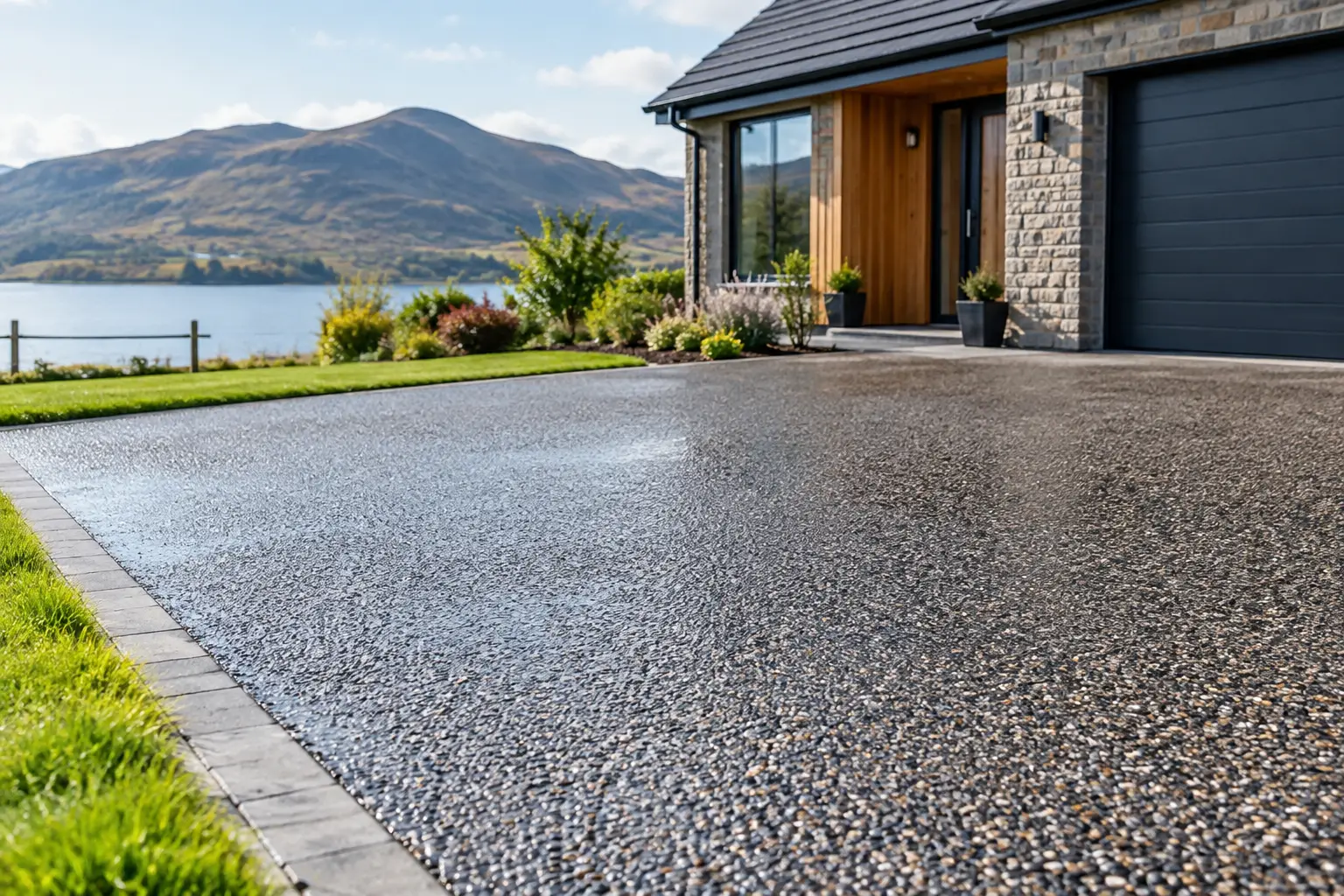
A driveway can look excellent on the day it is laid, but its real value becomes clear after a few Scottish winters, regular car use and the occasional delivery lorry. This tarmac driveway durability review looks at how the surface performs over time, what affects its lifespan and whether it is the right long-term choice for your home.
Tarmac remains one of the most practical driveway materials for properties across Edinburgh, the Lothians and the Central Belt. It creates a clean, smart entrance, handles everyday traffic well and can be installed efficiently when the groundwork is properly planned. However, a durable driveway is never just about the surface. The foundation, drainage and quality of installation matter just as much.
How long does a tarmac driveway last?
A professionally installed tarmac driveway can commonly last 15 to 20 years, and sometimes longer with sensible care. The exact lifespan depends on how the driveway is used, the condition of the ground beneath it and exposure to water, frost and sunlight.
For a typical family home with cars coming and going each day, tarmac is well suited to the job. Its slight flexibility is an advantage in Scotland, where ground movement and changing temperatures can put rigid surfaces under pressure. Rather than cracking immediately, a well-laid tarmac surface can absorb some movement.
That said, tarmac is not indestructible. Repeated turning in the same place, heavy vans, skips or larger vehicles can leave marks over time, particularly in warm weather when the material softens slightly. This does not rule tarmac out for busy households, but it does mean the driveway should be designed for the weight and traffic it will receive.
What makes a tarmac driveway durable?
The visible black surface is only one part of the installation. A driveway that lasts begins with a stable, correctly prepared base. If soft ground, old paving or poor-quality material is simply covered over, problems are likely to show through sooner rather than later.
A strong sub-base
Excavation to the correct depth is essential. The ground needs to be levelled, compacted and built up with a suitable aggregate sub-base before the tarmac is laid. This distributes the weight of vehicles and reduces the risk of sinking, rutting and uneven patches.
The required depth will vary between properties. A driveway used only by small cars may need a different construction from one where a van, caravan or frequent deliveries are expected. An experienced contractor will assess access, ground conditions and intended use before recommending the right build-up.
Effective drainage
Water is one of the biggest threats to driveway durability. Standing water can weaken the layers below the surface, contribute to frost damage and leave the driveway looking tired before its time.
A tarmac driveway should have a planned fall so rainwater runs to a suitable drainage point rather than pooling at the garage, front door or pavement. Depending on the property, this may involve drainage channels, soakaways or permeable areas within the wider landscape design. Good drainage also helps keep the entrance safer and cleaner through wet weather.
Quality materials and compaction
Tarmac must be laid and compacted correctly while it is at the right temperature. Poor compaction can result in a thinner, weaker surface that is more vulnerable to wear. Clean edges and proper restraints are equally important, as they help prevent the driveway from spreading or breaking down at the sides.
This is why the lowest quote is not always the best value. A reduced price can reflect less excavation, a thinner sub-base or shortcuts in the finish – all of which may lead to avoidable repair costs later.
How tarmac handles Scottish weather
Tarmac performs well in the wet, changeable conditions common across Central Scotland, provided water can drain freely. Unlike loose gravel, it gives a solid surface underfoot and under tyres, and it does not need frequent raking back into place after heavy rain.
Frost and thaw cycles are a consideration for every driveway material. Water that gets beneath a poorly installed surface can freeze, expand and gradually create cracking or movement. With a strong foundation and proper drainage, tarmac has enough flexibility to cope well with seasonal temperature changes.
During periods of strong sunshine, tarmac can become softer than block paving or concrete. This is rarely an issue for normal vehicle use, but sharp turns while stationary, motorcycle stands and very heavy loads can leave impressions. Homeowners who regularly park large commercial vehicles in the same location should discuss this at the design stage, as a reinforced construction or alternative surface may be more appropriate.
Tarmac driveway durability review: the advantages and trade-offs
Tarmac is popular because it offers a strong balance of cost, speed and performance. It can cover larger areas neatly without the individual joints found in block paving, giving a simple, modern finish that suits both traditional and contemporary homes.
It is also relatively straightforward to maintain. Sweeping away leaves, soil and debris helps prevent moss taking hold around edges. Keeping drainage channels clear is particularly worthwhile in autumn and winter. Small cracks or damaged sections can often be repaired before they develop into larger issues.
The trade-off is that tarmac does not offer the same decorative detail as block paving, Indian sandstone or patterned concrete. Its appearance is deliberately clean and understated. For many homeowners, that is exactly the appeal, especially when the driveway is edged with contrasting block paving, decorative stonework or well-planned planting.
Colour choices are more limited too, although red tarmac and carefully chosen edging can create a more distinctive finish. If a property requires a highly decorative entrance or complex pattern, block paving may provide greater design flexibility. If the priority is a dependable, tidy and cost-effective surface, tarmac is difficult to overlook.
Signs a tarmac driveway needs attention
A few small surface marks do not necessarily mean replacement is required. However, it is sensible to act early if you notice cracks widening, water sitting in one area, loose edges, wheel ruts or dips developing near parking spaces.
These issues can be caused by surface wear, but they may also point to a problem below the tarmac. Patching a weak area without addressing failed drainage or an unstable base may only provide a short-term improvement. A proper assessment should identify whether a local repair is suitable or whether the driveway needs more substantial renewal.
Oil spills should also be dealt with promptly where possible. Fuel and oil can soften bitumen over time, particularly if left sitting on the surface. Gentle cleaning and avoiding harsh chemicals will help protect the finish.
Is tarmac the right choice for your driveway?
Tarmac is an excellent option for homeowners who want a practical driveway that looks smart, copes with everyday use and offers good long-term value. It works particularly well for larger driveways, sloping entrances and properties where a fast, clean installation is a priority.
The best result comes from matching the design to the property. A simple tarmac surface may be all that is needed, while another home may benefit from block edging, new drainage, fencing, turfing or planting to create a complete front garden transformation. The driveway should improve how the space works as well as how it looks from the street.
For homeowners considering a new surface, the most useful next step is not to focus on colour alone. Ask how the ground will be prepared, where rainwater will go and what depth of construction is proposed for your vehicles. Those details are what turn a good-looking tarmac driveway into one that continues to perform year after year.