A driveway can look smart on the day it is laid and still become a nuisance six months later if it stains easily, grows weeds through every joint or starts holding water after heavy rain. For most homeowners, the best low maintenance driveway options are the ones that keep their finish, cope with Scottish weather and do not demand constant sweeping, re-sanding or patching.
The right choice depends on how you use the space, the age of the property and how much upkeep you are realistically willing to do. A family home with two cars and regular foot traffic needs something different from a smaller front garden where kerb appeal matters most. That is why it helps to compare maintenance properly, not just appearance on installation day.
What makes a driveway low maintenance?
Low maintenance does not mean no maintenance. Every surface benefits from occasional cleaning and basic care, but some materials are far more forgiving than others.
A genuinely low maintenance driveway should resist weed growth, deal well with rain, stay stable under vehicle weight and clean up without specialist treatment every few weeks. It should also suit the ground conditions beneath it. Even the best material can become a problem if the sub-base, drainage or edging has been poorly installed.
This is often where homeowners get caught out. They focus on the top finish and not the groundwork. If the base is weak or water is not managed correctly, you can end up with dips, loose sections or standing water regardless of the surface chosen.
Best low maintenance driveway options for UK homes
1. Resin bound driveways
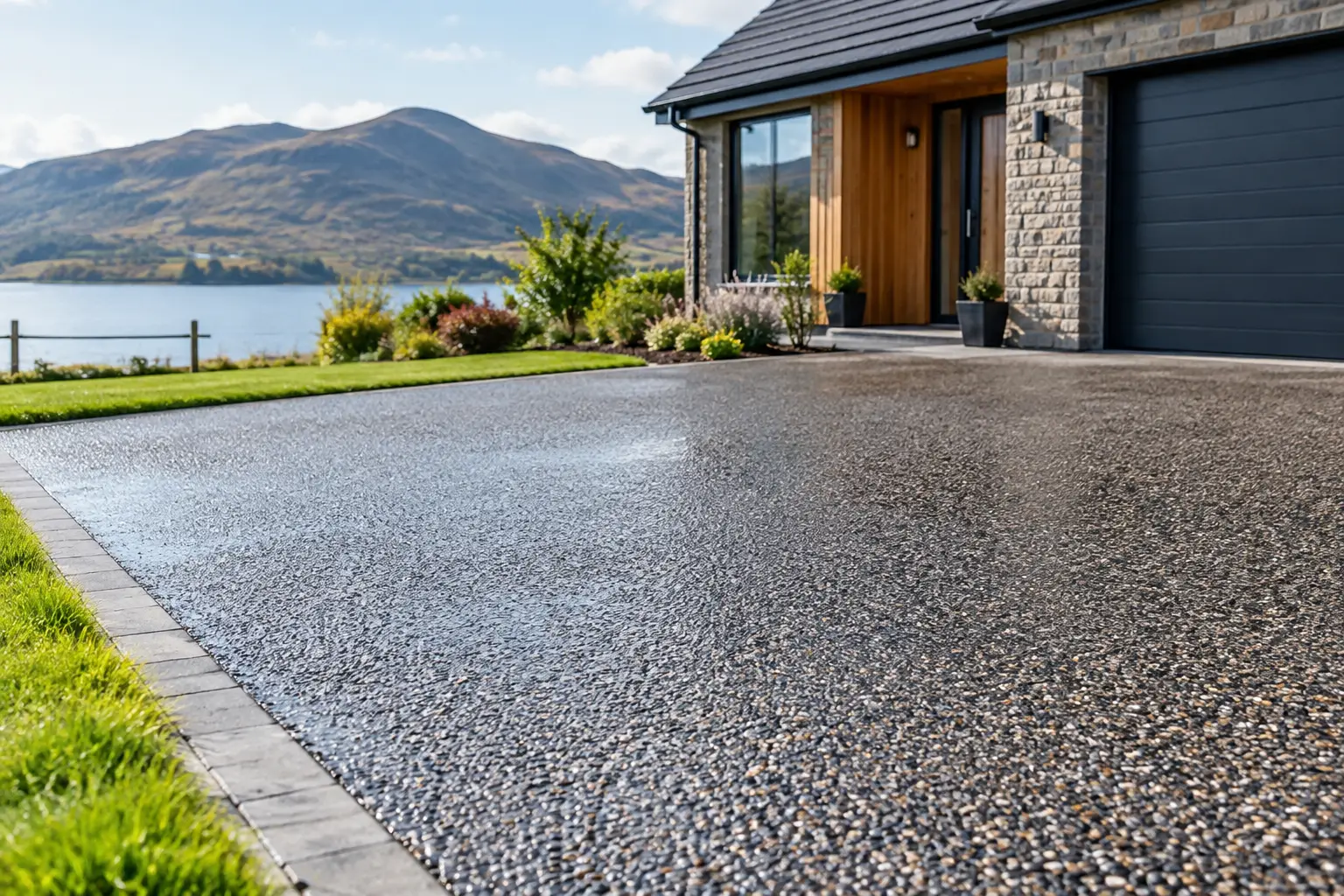
Resin bound surfacing is one of the strongest options if you want a clean, modern finish with minimal ongoing work. The surface is smooth, attractive and porous, which means rainwater can drain through rather than sitting on top. That can be a real advantage in areas that see regular wet weather.
Maintenance is usually straightforward. Sweeping, occasional power washing on a light setting and removing debris before it builds up are often enough to keep it in good condition. Weed growth tends to be limited because there are no wide joints for weeds to take hold in.
The trade-off is cost. Resin bound driveways are not the cheapest option upfront, and the installation needs to be done properly for the finish to perform as it should. A poor resin job can discolour, loosen or fail early. Done well, though, it offers strong long-term value.
2. Tarmac driveways
Tarmac remains a practical choice for homeowners who want durability without fuss. It handles vehicle traffic well, gives a tidy finish and usually requires less routine upkeep than more decorative surfaces.
For many properties, especially where the driveway is mainly there to do a job rather than make a design statement, tarmac is a sensible option. It is quick to install, easy to keep clear of debris and less likely to suffer from weed issues than block paving or loose gravel.
Its main drawback is appearance. While modern edging and layout can improve the final look, tarmac does not offer the same design flexibility as resin or paving. It can also soften slightly in very hot weather and may need occasional patch repairs over time, particularly on older surfaces.
3. Block paving with the right finish
Block paving is not always the first thing people think of when they hear low maintenance, but it can still be one of the best low maintenance driveway options if it is installed correctly and sealed where appropriate. It gives a more traditional, high-end look and suits a wide range of property styles.
The key point is that block paving needs more attention than resin or tarmac. Joints can encourage weed growth, kiln-dried sand may need topping up and individual blocks can settle if the sub-base is not strong enough. On the other hand, repairs are easier because damaged areas can be lifted and replaced without redoing the whole driveway.
If appearance matters as much as upkeep, block paving can be a strong compromise. It is not the absolute lowest-maintenance choice, but it balances practicality with kerb appeal very well.
4. Gravel driveways
Gravel is often chosen because it is cost-effective, attractive and suitable for a range of homes, particularly rural or traditional properties. It drains well and avoids the hard, flat look some homeowners do not want at the front of their house.
That said, gravel is only low maintenance in the right setting. It does not crack, but it does move. Stones can spread into paths, roads and borders, and the surface may need raking or topping up to stay neat. Weed membrane below helps, but weeds can still appear from airborne seeds and organic matter settling between the stones.
For homeowners who do not mind a little occasional tidying, gravel can be a practical option. If you want a surface that stays exactly where it was put with almost no intervention, it may not be the best fit.
5. Pattern imprinted concrete
Pattern imprinted concrete appeals to homeowners who want a decorative driveway without the joints of block paving. Because it is laid as a continuous slab, there is less opportunity for weeds to come through the surface.
It is fairly easy to clean and can give the look of stone or paving at a different price point. However, it is not without risk. If cracking does occur, repairs are often more obvious than with modular materials. The surface also benefits from resealing from time to time to maintain its finish and protect it from wear.
For some homes, it is a good middle ground between appearance and upkeep. For others, especially where ground movement is a concern, there may be better long-term options.
6. Concrete driveways
Plain concrete is not the most stylish surface, but it can be dependable and low effort once installed. It copes well with daily use and generally needs little more than cleaning and occasional attention to stains.
The issue is that concrete can look quite stark on domestic properties unless it is softened with borders, brickwork or landscaping. Cracks can also become noticeable with age. If you are prioritising function over finish, it may suit. If visual impact matters, there are usually stronger alternatives.
7. Natural stone setts or paving
Natural stone gives a premium finish and excellent character, particularly on period homes. It is hard-wearing and long-lasting, but it is not always the easiest route to low maintenance.
Like block paving, stone surfaces have joints, and that means more chance of moss, algae or weed growth over time. Some stones also need more careful cleaning to preserve their appearance. It is a strong choice for style and longevity, but not usually the most hands-off option.
Which driveway option is easiest to maintain?
For most households, resin bound and tarmac come out strongest on low maintenance. They are easier to keep tidy, less prone to weed problems and better suited to homeowners who want a surface that works without much intervention.
If design flexibility matters more, block paving remains popular, but it does ask a bit more from you over the years. Gravel is affordable and attractive, though it needs regular light upkeep. Pattern imprinted concrete can work well, but only when installed on a properly prepared base and maintained with resealing when needed.
The maintenance question most people miss
Surface material matters, but drainage matters just as much. In Scotland, where rainfall is a regular part of life, a driveway that cannot manage water properly will never feel low maintenance. Puddles encourage staining, algae and premature wear, and water problems can affect nearby paths, walls and garden areas too.
That is why the best result usually comes from looking at the whole scheme – excavation depth, sub-base, edge restraints, drainage falls and the final surface. A driveway built properly from the ground up will always be easier to live with than one chosen on appearance alone.
How to choose the right one for your property
Start with how you actually use the driveway. If you park multiple vehicles every day, strength and stability need to come first. If the front of the house is highly visible and you want to improve kerb appeal before selling or renovating, finish may carry more weight.
Then think honestly about upkeep. Some homeowners are happy to pressure wash, re-sand joints and keep on top of moss. Others want a driveway that only needs the odd clean. There is no wrong answer, but there is a wrong material for the level of effort you want to give it.
For many homes across Edinburgh, the Lothians and the wider Central Belt, a well-installed resin bound or tarmac driveway offers the best balance of appearance, durability and ease of care. For others, block paving is worth the extra upkeep because of the visual finish it brings. An experienced installer can help match the material to the property rather than pushing a one-size-fits-all answer.
If you are replacing a tired, uneven or high-maintenance driveway, it is worth choosing a surface that makes life easier for years, not just one that looks good for the first few weeks. The best driveway is the one that still works well when the weather turns, the cars come and go every day, and you would rather spend your weekend enjoying the garden than maintaining the front of it.