A front garden has to work harder than most parts of a property. It is the first view from the road, the route to the front door, and often the place where cars, bins, visitors and poor weather all compete for space. The best front garden makeovers do not simply add plants or a new path. They solve these practical issues while giving the house a cleaner, more valuable-looking finish.
For homes across Edinburgh, the Lothians and the Central Belt, material choice matters just as much as design. A surface that looks excellent in summer but becomes slippery, stained or uneven through a wet Scottish winter is not a good investment. A well-planned makeover should suit the property, manage water properly and remain easy to maintain year after year.
1. Create a driveway with clear structure
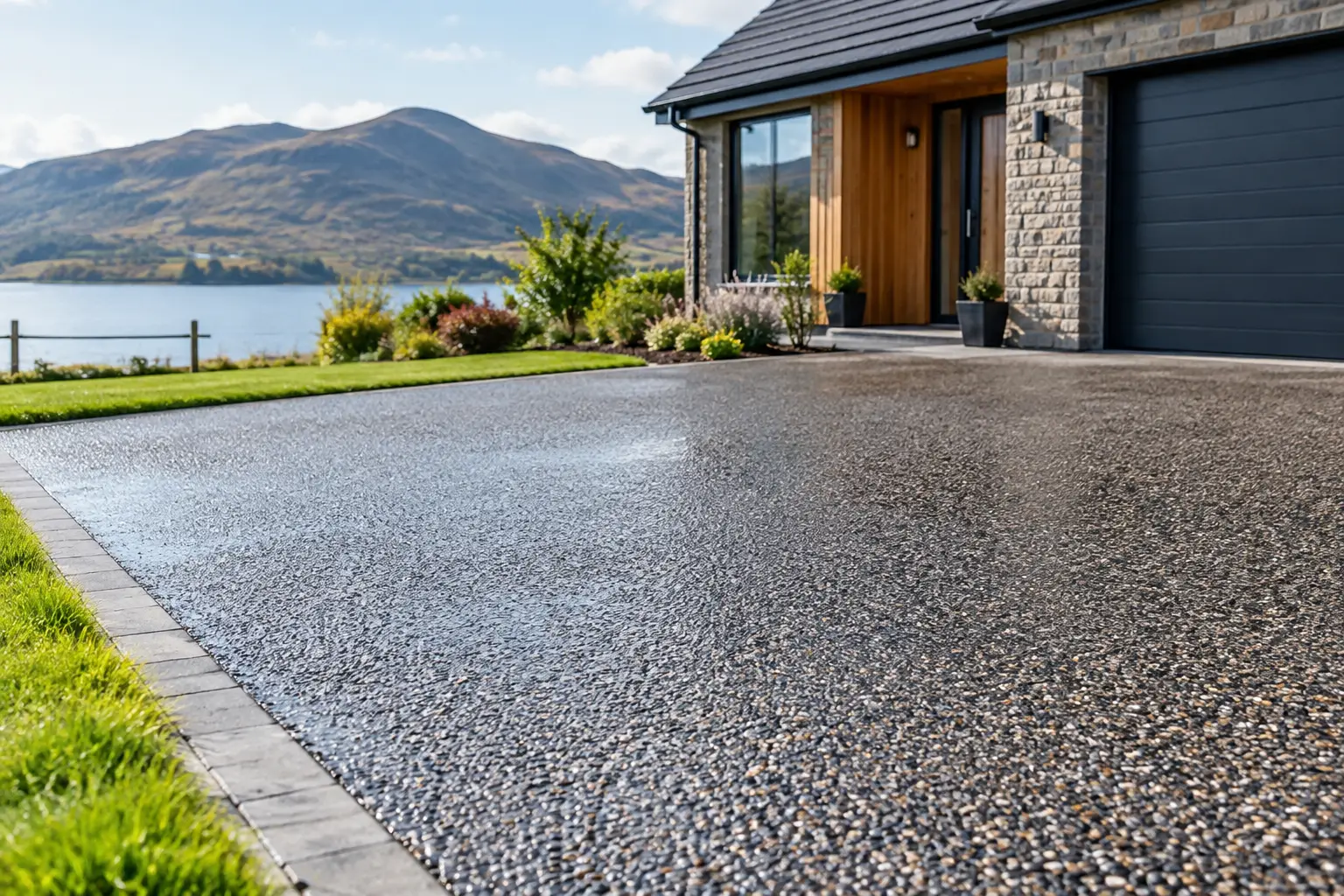
A tired, cracked or patchy driveway can make an otherwise well-kept home look neglected. Replacing it with a properly prepared driveway is one of the most effective ways to improve kerb appeal and everyday convenience.
Block paving is a popular choice because it offers colour, pattern and neat edging. It can complement both traditional stone homes and newer-build properties, particularly when a contrasting border is used to define parking spaces and pathways. A more contemporary home may suit smooth paving, natural stone detailing or a simple charcoal-and-grey scheme.
The appearance is only part of the job. A lasting driveway needs suitable excavation, a solid sub-base, accurate levels and drainage that directs surface water away from the house. Skipping these groundworks may reduce the initial cost, but it often leads to dips, standing water and loose paving later on.
2. Combine a driveway and front path
Where vehicles currently dominate the entire front garden, a separate pedestrian route can make the space feel more welcoming and organised. A path from the gate, pavement or driveway to the front door gives visitors a clear approach and keeps muddy footprints away from the lawn or planted borders.
Indian sandstone paving is particularly effective for this type of makeover. Its natural variation gives a front entrance character without looking over-designed, and it works well alongside decorative gravel, stone walls and established planting. Choose a finish and colour that suit the house rather than following a short-lived trend. Buff and grey tones are versatile choices for many Scottish properties.
A path should be wide enough for comfortable daily use and laid with appropriate falls. If the route includes steps, ensure they are well defined, stable and properly drained. This is one area where professional levels and finishing make a visible difference.
3. Replace a high-maintenance lawn with artificial grass
A small front lawn can look attractive, but it is often the first part of the garden to suffer from shade, foot traffic, pet use and wet ground. If grass rarely looks healthy, artificial grass can provide a consistent green finish without weekly mowing, feeding or reseeding.
This option works especially well in compact gardens where the lawn is mainly decorative. It can soften the appearance of hard landscaping and provide a tidy contrast to paving or a driveway. Quality installation is essential: the existing ground must be excavated and levelled, with a stable base and suitable edging to prevent movement.
Artificial grass is not the right answer for every home. Larger gardens with sunny, usable lawns may benefit more from quality turf, while those who enjoy gardening may prefer a real lawn with improved drainage and stronger border planting. The best choice depends on how the garden is actually used, not just how it looks in photographs.
4. Use decorative stone for a neat, low-maintenance finish
Decorative gravel, slate or chippings can transform bare soil and awkward side areas quickly. These materials suit front gardens where homeowners want an orderly appearance with little ongoing work. They also provide a useful contrast beside paving, brickwork and greenery.
For best results, decorative stone should not be laid straight onto soil. Proper preparation, including weed control and a suitable membrane where appropriate, helps keep the surface cleaner and reduces maintenance. Strong edging is equally important. Without it, loose stone gradually spreads across paths and onto driveways.
Gravel can also be an economical way to cover a wide area, although it is less suitable for households needing easy access for pushchairs, wheelchairs or wheeled bins. In that case, a firm paved route combined with gravel borders is usually the better balance.
5. Add raised beds or retaining walls
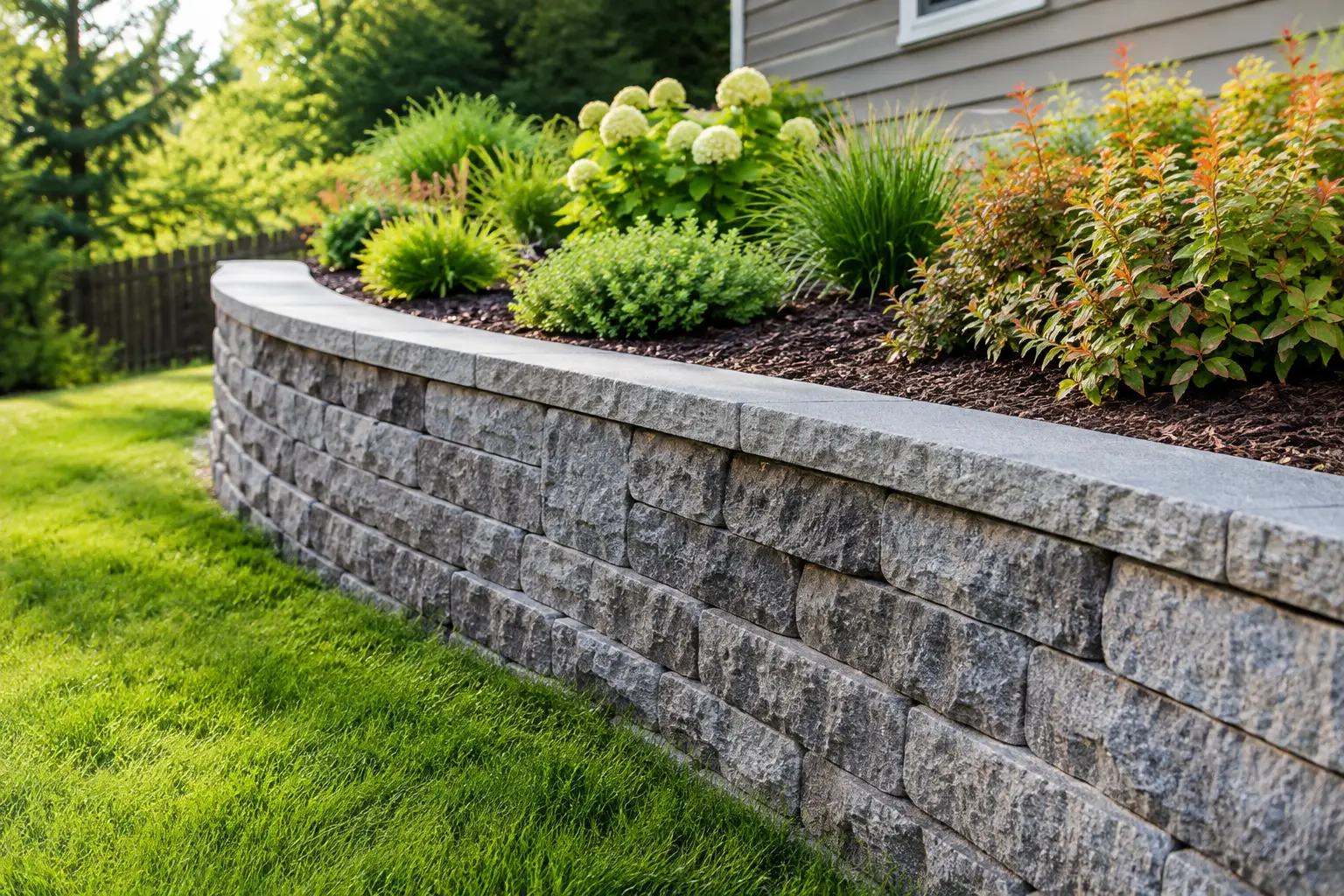
A sloping front garden often looks difficult to improve, but it can become a real feature when levels are handled properly. Low retaining walls, raised beds and steps can turn an uneven approach into a structured entrance with clear planting zones.
Decorative brickwork and natural stonework are both strong choices. Brick can tie in with the property’s existing exterior, while stone offers a more traditional or premium look. The wall needs to be built for its purpose, particularly where it retains soil, supports a change in level or borders a driveway.
Raised beds also make planting easier to manage. Instead of scattered shrubs lost across a large area, a few carefully planned beds can frame the entrance and add colour throughout the year. Evergreen structure, flowering perennials and hardy grasses often give a better return than crowded seasonal bedding plants.
6. Make the entrance the focal point
Some of the best front garden makeovers focus on the final few metres before the front door. Replacing a narrow, damaged path, renewing steps or adding clean edging can make the whole property feel more considered, even when the garden itself is modest.
Think about what is seen first: the front gate, driveway edge, door path and planting around the entrance. A symmetrical layout can suit formal homes, while an offset path with softer planting may suit a cottage-style or period property. The goal is not to fill every inch of space. It is to create a route that feels intentional and easy to use.
Lighting can be considered at this stage too. Discreet lights along a path or by steps improve safety on dark winter evenings and make the garden more inviting. Keep fittings simple and avoid placing them where they create glare for drivers or neighbours.
7. Tidy overgrown trees and hedges
An excellent new driveway or paved entrance can still be hidden by unmanaged hedges, overgrown conifers or low branches. Pruning and hedge reduction are often the missing part of a front garden transformation, allowing more light into the space and revealing the property properly from the street.
This needs a measured approach. Heavy cutting at the wrong time of year can damage some plants, and trees close to roads, buildings or overhead services require experienced handling. If a tree is diseased, unsafe or simply in the wrong place, professional felling and stump removal can create room for a more practical layout.
Once the major work is complete, keep boundaries maintained at a height that offers privacy without blocking light or sightlines. A clean hedge, well-built fence or stone boundary makes the rest of the makeover look sharper.
8. Choose materials that match the property and budget
A successful front garden does not need every premium material available. The most convincing schemes usually use two or three finishes well: perhaps block paving for parking, Indian sandstone for the path, and decorative stone in the borders. Too many colours, patterns and features can make a small area feel busy.
Set priorities before work starts. If the driveway is failing, invest in sound ground preparation first. If parking is already adequate, a new path, planting beds and entrance steps may deliver the stronger visual improvement. A clear quotation should explain the materials, preparation, drainage and finishing work included, so there are no surprises once the project is underway.
For homeowners planning a complete exterior upgrade, Roberts Landscapes can bring driveway installation, paving, turfing, fencing, stonework and garden maintenance together in one coordinated project. That means the finished front garden is designed as a whole rather than as a collection of separate jobs.
The right makeover should make arriving home easier as well as more satisfying. Start with the problem you want to solve, choose durable materials that suit the house, and give proper attention to the ground beneath the finished surface. The result will be a front garden that earns its place every day, whatever the weather brings.