A sandstone patio should look warm, natural and full of character, not blackened by algae or hidden beneath winter grime. Knowing how to clean sandstone patios properly makes a real difference, especially in Scotland where damp conditions, shade and falling leaves can quickly leave paving slippery and tired-looking. The key is to clean the surface thoroughly without stripping the stone, opening up its texture or damaging the joints.
Indian sandstone is a popular choice for patios because every slab has natural variation in colour and grain. That same natural finish needs a little more care than manufactured paving. A harsh cleaner or overly powerful pressure washer may give a quick result, but it can leave the patio more vulnerable to staining, erosion and repeat moss growth.
Start with the right conditions
Choose a dry day with no heavy rain expected for at least 24 hours. This gives you time to assess the paving, apply any suitable cleaner and allow the area to dry afterwards. Avoid cleaning in very hot, bright conditions too, as products can dry onto the slabs before they have time to work.
First, remove furniture, pots and loose debris. Sweep the whole patio with a stiff outdoor broom, paying attention to corners, step edges and joints where leaves and soil collect. This simple preparation reveals whether you are dealing with ordinary surface dirt, green algae, black lichen, rust marks or more stubborn staining.
Check the condition of the pointing before introducing water. If joints are already loose, cracked or missing mortar, aggressive cleaning can make the issue worse. Repointing or repairing damaged areas before a deep clean will help keep the patio stable and looking finished.
How to clean sandstone patios safely
For most regular cleaning, warm water, a stiff brush and a pH-neutral patio cleaner designed for natural stone are the sensible starting point. Wet a manageable section of the paving, apply the product as directed and allow it to dwell for the stated time. Then scrub with a stiff nylon-bristled brush and rinse well with clean water.
Work in small areas rather than covering the full patio at once. This prevents cleaning solution from drying out and gives you a more even result. Brush along the natural texture of the stone where possible, using firm but controlled pressure. Sandstone is durable underfoot, but it is still a porous natural material, so there is no benefit in attacking it with wire brushes or abrasive pads.
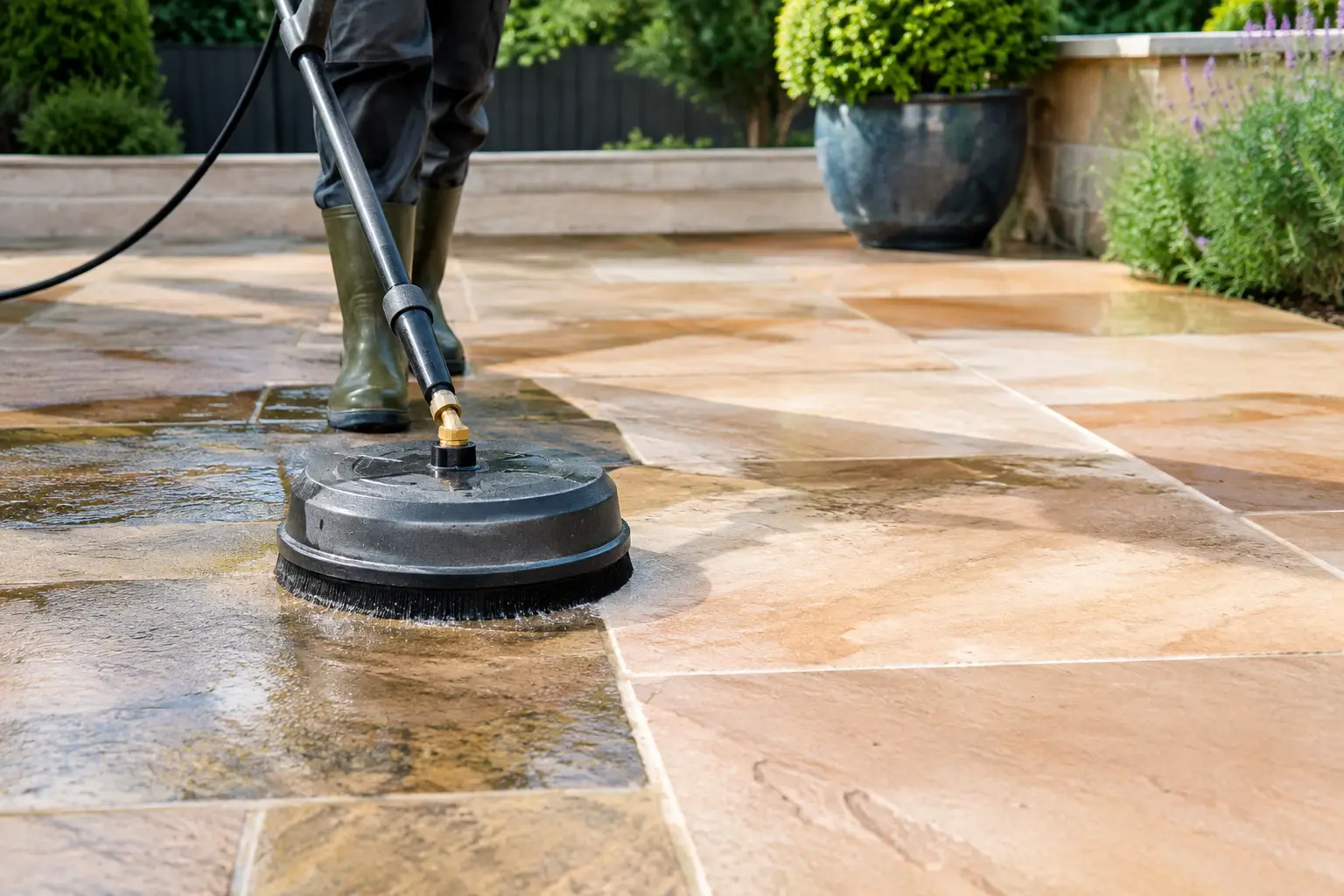
A pressure washer can be useful for larger patios, but only when used carefully. Set it to a low or medium pressure, use a fan-shaped spray and keep the lance moving. Hold it well back from the paving rather than working close to the surface. Direct, high-pressure jets can scar softer sandstone, remove the fine surface particles and blast out jointing material.
Never use a rotating turbo nozzle on sandstone unless a paving specialist has confirmed that the slab type and condition are suitable. It is powerful enough to create visible lines and patches that cannot simply be cleaned away. If the patio has delicate edges, aged pointing or softer calibrated stone, a brush-and-cleaner method is often the better option.
Removing moss, algae and black spots
Green algae and moss are common on patios that sit beneath trees, beside fencing or on the north side of a property. Besides looking untidy, they make paving dangerously slippery in wet weather. A purpose-made algae and moss treatment for natural stone is usually the most effective approach.
Apply it exactly as the manufacturer directs, keeping children, pets and plants away until the area is safe to use. Some treatments are designed to be left to work over time, while others require scrubbing and rinsing. Do not assume that stronger means better. Bleach, brick acid and highly acidic patio cleaners can discolour sandstone, weaken the surface and harm surrounding planting.
Black spots are often lichen, which roots into the pores of stone and can take more than one treatment to lift. Repeated gentle cleaning is safer than increasing pressure or using harsh chemicals. Patience protects the paving and produces a more consistent finish.
If moss keeps returning rapidly, look beyond the cleaning job itself. Overhanging branches, blocked drainage channels and constantly damp joints all encourage growth. Pruning back dense shade, clearing gutters and making sure water drains away from the patio can reduce the problem over the long term.
Treat stains according to their cause
Sandstone does not respond well to one-size-fits-all stain removal. Before applying anything, identify what caused the mark and test the product on a discreet section of paving first. Natural stone varies between batches, and an older patio may react differently from a newly laid one.
Oil drips from a barbecue or garden machinery should be dealt with quickly. Blot fresh oil with an absorbent material rather than rubbing it further into the slab, then use a natural-stone degreaser. Several light applications may be needed for an old stain that has soaked into the surface.
Rust stains from metal furniture, planters or tools need a stone-safe rust remover. Avoid household rust products unless they specifically state they are suitable for sandstone. Fertiliser can also leave orange-brown marks, so take care when feeding nearby borders.
For organic marks from leaves, berries or flower pots, a pH-neutral cleaner and gentle brushing may be enough. Do not use washing-up liquid as a routine patio cleaner. It can leave a residue that attracts dirt and may affect nearby soil or planting when rinsed away.
Protect joints, edges and nearby planting
The joints between sandstone slabs are as important as the slabs themselves. Whether your patio uses traditional mortar pointing, a modern jointing compound or a permeable jointing material, inspect it after cleaning. Replace any loose material promptly so water cannot get beneath the paving and cause movement during freeze-thaw weather.
Take particular care around steps, retaining walls and the edge where paving meets lawn or flowerbeds. Direct pressure washing at these areas can undermine bedding material or spray soil across freshly cleaned stone. Cover sensitive plants if needed and rinse foliage with clean water should any approved cleaner splash onto it.
Once the patio is clean and fully dry, some homeowners choose to apply a breathable impregnating sealer formulated for sandstone. This can help reduce water absorption and make spills easier to manage. It is not essential for every patio, and it will not cure poor drainage or structural movement. A sealer must be compatible with the stone and should never create a shiny, slippery surface.
Keep cleaning light and regular
A patio that receives a quick sweep every week or two is much easier to maintain than one left until spring. Clear wet leaves in autumn, remove soil from joints, and deal with fresh spills before they settle. In many gardens, a gentle clean once or twice a year is enough, with targeted algae treatment in shaded spots as required.
Avoid dragging metal furniture, heavy pots or barbecue legs across the paving, as scratches and rust rings can spoil the finish. Raised pot feet are a practical addition because they allow water to drain and prevent dark moisture marks beneath containers.
If your patio has widespread staining, sunken slabs, failing joints or water sitting on the surface after rain, cleaning alone will not provide a lasting answer. These are often signs that the base, drainage or installation needs professional attention. A properly prepared sandstone patio should be attractive, stable and straightforward to look after for years.
For homeowners across Edinburgh, the Lothians and the Central Belt, Roberts Landscapes can assess tired sandstone paving and advise whether careful maintenance, repairs or a complete patio upgrade will give the best value. The right cleaning method preserves the natural character that made you choose sandstone in the first place.