School runs, scooters, muddy football boots and one car becoming two can turn a driveway into one of the hardest-working parts of a family home. The best driveway surfaces for families need to do more than look smart from the kerb. They need to be safe underfoot, stand up to daily wear, cope with Scottish weather and still feel worth the investment years down the line.
For most households, there is no single perfect answer. The right choice depends on how your driveway is used, how much maintenance you are willing to take on and whether appearance, drainage or long-term value matters most. A surface that suits a quiet front garden may be the wrong fit for a busy family home with prams, bikes and regular visitors.
What makes the best driveway surfaces for families?
A family-friendly driveway should be practical first. That means reliable grip in wet weather, a stable surface for children and pushchairs, and enough strength to handle repeated parking without sinking or shifting. It should also be straightforward to maintain, because most homeowners are not looking for another high-maintenance job outside the house.
Drainage matters as well, especially across Scotland where heavy rain can quickly expose weak ground preparation or unsuitable materials. Puddles, loose stone and surface cracking are not just cosmetic issues. They affect safety, day-to-day convenience and how long the driveway actually lasts.
Then there is the visual side. A driveway takes up a large part of the front of your property, so the finish needs to complement the house rather than look like an afterthought. The best results balance hard-wearing performance with a finish that lifts kerb appeal.
Block paving is one of the strongest all-round options
For many family homes, block paving is one of the safest recommendations because it covers the main priorities well. It is durable, attractive and available in a wide range of colours, sizes and laying patterns, which makes it easier to match newer homes, traditional properties and everything in between.
Underfoot, block paving feels solid and even, which is useful if children are playing outside or if you regularly move bins, bikes or buggies across the front of the house. If installed properly on a strong sub-base, it handles vehicle weight well and gives a tidy, high-end finish.
There are trade-offs. Weed growth between joints can become an issue if the surface is neglected, and some driveways benefit from occasional re-sanding or sealing to keep them looking their best. It is also not the cheapest option upfront. That said, for homeowners who want a good mix of appearance, lifespan and practicality, it remains one of the best driveway surfaces for families.
Resin-bound driveways suit busy households that want low maintenance
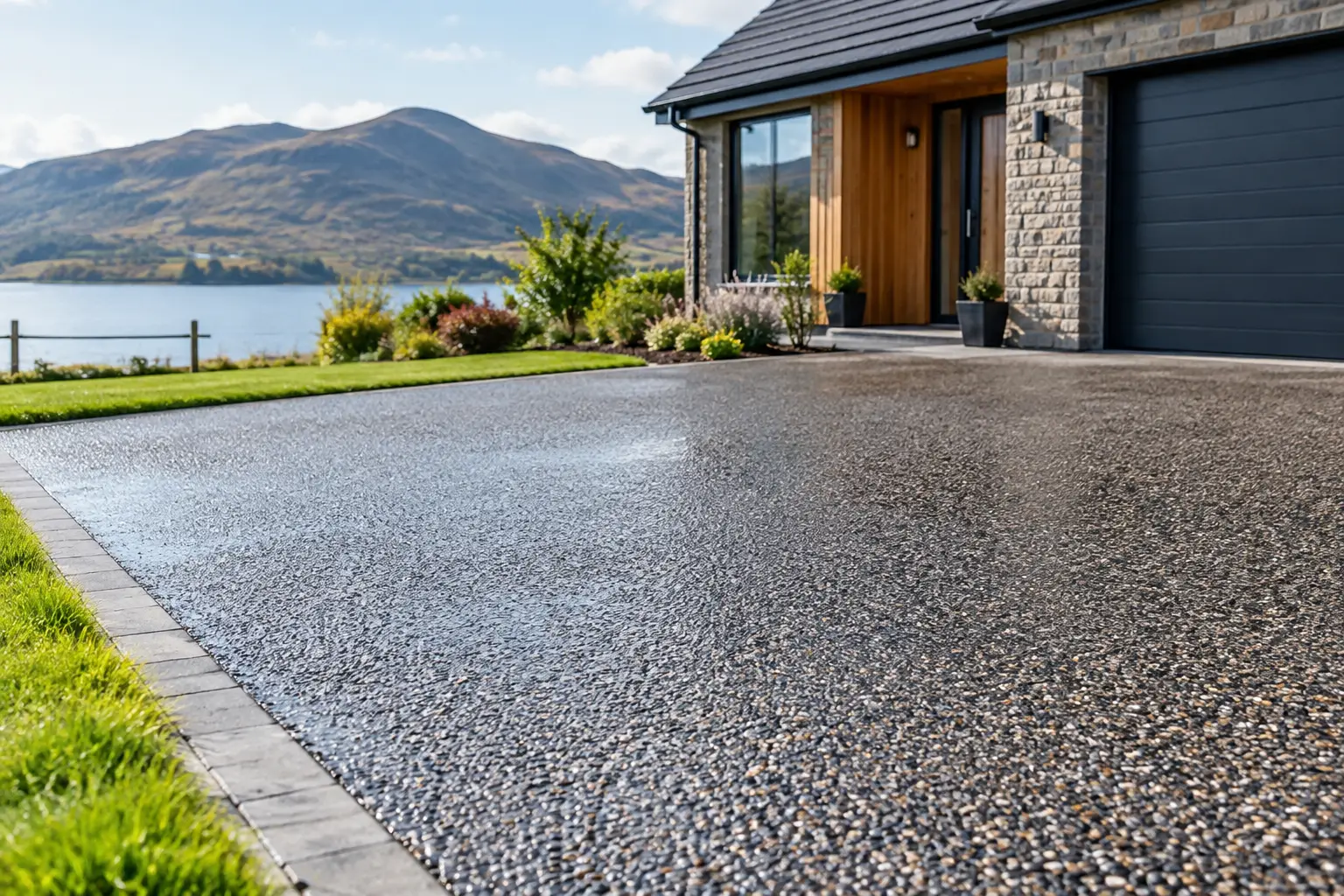
Resin-bound surfacing has become increasingly popular for family homes because it creates a smooth, clean finish with very little loose material on the surface. That is a real advantage if children are using scooters or bikes, or if you simply want a driveway that feels neat and easy to live with.
One of its strongest points is permeability. Water drains through the surface rather than sitting on top, which helps reduce puddling and supports better drainage overall. On driveways where surface water has been a recurring problem, this can make a noticeable difference.
Resin-bound also scores well on appearance. It gives a crisp, modern look and comes in a variety of aggregate blends, so the finish can be subtle or more decorative depending on the property. The main thing to understand is that quality installation is critical. If the base is poor or the materials are not laid correctly, performance suffers. It is also usually more expensive than basic gravel or plain concrete, so it suits homeowners who are looking at long-term value rather than the lowest initial cost.
Tarmac is practical, durable and often underestimated
Tarmac does not always get the same attention as block paving or resin, but it remains a strong option for family driveways. It is hard-wearing, cost-effective on larger areas and particularly useful where homeowners need a clean, simple finish without unnecessary fuss.
For families with multiple vehicles, tarmac offers dependable strength and a surface that copes well with regular use. It is generally quick to install compared with some other finishes, and repairs can be more straightforward than replacing decorative paving over a large section.
The downside is appearance. On its own, tarmac can look quite plain, especially if you want the driveway to add character to the front of the house. That is why many homeowners choose to soften it with brick edging, contrasting borders or surrounding landscaping. Done properly, it can look far more polished than people expect.
Gravel can work, but it depends on how your family uses the space
Gravel is often attractive because it is affordable, quick to lay and naturally permeable. For some rural or larger properties, it suits the setting and provides a traditional appearance that works well with stonework, lawns and planting.
For a family home, though, gravel comes with compromises. Loose stones can travel onto paths and pavements, children often kick them around, and pushchairs or scooters do not move over them as easily as they do on a fixed surface. If you have a sloping driveway, gravel can also shift over time and require regular raking and topping up.
That does not mean it should be ruled out. If budget is the main driver and the driveway is used mostly for parking rather than play or foot traffic, gravel can still be a sensible choice. But for many busy households, it ends up being less convenient day to day than block paving, resin-bound or tarmac.
Concrete offers strength, but finish matters
Concrete is strong and usually lower in cost than more decorative options, which makes it appealing for homeowners focused on function and value. It can cope with vehicles well and gives a stable surface underfoot.
The challenge is that plain concrete can look harsh, and over time it may stain, crack or show wear if the installation and expansion detailing are not handled properly. In colder, wetter conditions, those weaknesses become more noticeable. Decorative concrete finishes can improve appearance, but they do not always offer the same character or repair flexibility as block paving.
For some homes, concrete is the right answer where practicality matters more than design. For others, it can feel too basic for such a visible part of the property.
How to choose the best surface for your household
The best decision usually comes from looking at your actual routine rather than just the brochure finish. If your driveway doubles as a safe area for children to play, smooth and even surfaces tend to work best. If drainage has been a problem, permeable options deserve serious attention. If you have several vehicles coming and going, sub-base construction and load-bearing strength matter just as much as the surface itself.
You should also think about maintenance honestly. Some homeowners are happy to keep a driveway brushed, treated and looking sharp. Others want something that will continue to perform with minimal effort. Neither approach is wrong, but it does affect which material will feel like good value after a few winters.
Property style matters too. A modern resin-bound finish may suit a contemporary home perfectly, while a traditional property might look better with block paving or a more classic aggregate appearance. The strongest results come when the driveway looks like it belongs with the house rather than competing with it.
Installation quality matters as much as the material
A well-built driveway starts below the surface. Ground preparation, edging, drainage planning and the depth of the sub-base all have a direct effect on how the finished driveway performs. Even the best-looking material will fail early if the installation underneath is poor.
That is especially important in areas where frost, rainfall and ground movement can put extra pressure on exterior surfaces. Homeowners often compare finishes by price alone, but the better question is what is included in the groundwork and whether the driveway is being built to last.
A proper quotation should make that clear. If one option seems much cheaper than another, there is usually a reason. Sometimes it is the surface material, but just as often it is the standard of preparation.
Which driveway surface is best for most families?
If you want the broadest balance of safety, appearance and long-term value, block paving is hard to beat. If you want a smooth, low-maintenance finish with strong drainage performance, resin-bound is a very good fit. If you want strength and practicality at a more straightforward price point, tarmac remains a solid choice.
Gravel and concrete still have their place, but they tend to suit more specific priorities rather than the average busy family home. The right choice is the one that fits your property, your budget and how your household actually lives.
If you are planning a new driveway, it helps to think beyond the first impression. The best surface is the one that still works well on a wet school morning, handles everyday wear without trouble and improves the look of your home for years to come.